Single DIN vs Double DIN
The real difference between single and double DIN head units, and why a single-DIN unit with a floating screen can outperform both.
We earn a commission if you buy through links on this page. How this site makes money.
The short answer
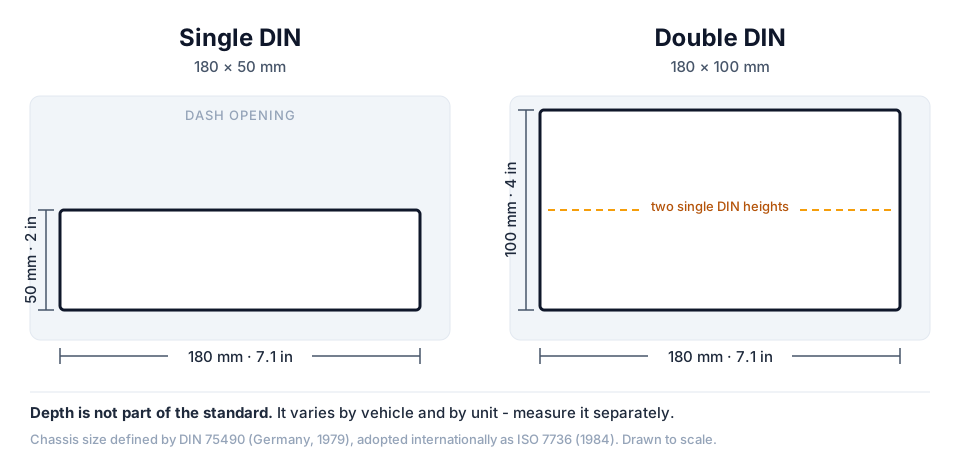
Single DIN and double DIN describe two standardized car radio opening sizes, not two tiers of quality. A single-DIN opening is 180 mm wide by 50 mm tall — about 7 by 2 inches. A double-DIN opening is the same 180 mm width but roughly 100 mm tall, about 7 by 4 inches, twice the height. Which one you need is decided by your dashboard, not by which unit has better specs — and there’s a real third option worth knowing about before you buy anything: a single-DIN chassis paired with a separate floating touchscreen, which can give you a big display in a car that only has room for the small opening.
What actually changes between the two
The physical difference is height, full stop — both sizes share the same 180 mm width. That extra roughly 50 mm of height on a double-DIN unit is mostly what makes a large touchscreen practical to build directly into the faceplate: more vertical room for the display, plus room below it for physical buttons, a volume knob, or a CD slot on units that still have one. A single-DIN unit has to fit its screen, controls and electronics into a much shorter face, which is why traditional single-DIN units built with a screen at all typically use a small one, often a fold-out or flip-up panel to gain a bit of extra display area within that 2-inch height.
None of this is about which size is more capable underneath the faceplate. Processing power, app support, amplifier output and wireless CarPlay or Android Auto support all come from the electronics inside the chassis, not from whether the faceplate is 2 or 4 inches tall. A well-specced single-DIN unit and a well-specced double-DIN unit can run the same software; the difference the driver actually experiences is mostly screen real estate and control layout.
Comparing the two directly
| Single DIN | Double DIN | |
|---|---|---|
| Opening size | 180 x 50 mm (~7 x 2 in) | 180 x 100 mm (~7 x 4 in) |
| Built-in screen | Small, or none; some use a flip-up panel | Room for a full touchscreen built into the faceplate |
| Physical controls | More room for knobs and buttons relative to screen size | Screen typically dominates the face; fewer or no physical knobs on many models |
| Where it’s found | Older vehicles, budget trims, some trucks and compact cars | Most vehicles from roughly the last 15–20 years with a factory touchscreen-sized opening |
| Upgrade path if the opening is too small for the screen you want | A floating-screen single-DIN unit, or a documented conversion to double DIN | Already at the larger size; the question becomes which double-DIN screen size fits your dash |
The case people don’t expect: a floating screen in a single-DIN opening
This is the option that surprises a lot of people shopping for the first time. Some single-DIN head units are built with the actual electronics and controls in a compact, single-DIN-depth chassis, while the display itself is a separate touchscreen mounted on its own bracket in front of or on top of the dash surface, connected by a cable rather than built into a tall faceplate. That display can be considerably larger than anything that would physically fit inside a real double-DIN opening — because it isn’t recessed into the dash at all, it’s sitting proud of it.
This exists to solve a specific problem: some vehicles have a double-DIN-width opening but very little depth behind it, so a normal double-DIN chassis with its screen built in simply doesn’t have room to sit flush. The current Jeep Wrangler JL (2018 and later) is a well-documented example — the factory radio bay is only around 5 inches deep with HVAC vents packed in behind it, which installers explicitly flag as too shallow for a traditional double-DIN chassis. The realistic aftermarket path on that dash is a shallow, single-DIN-depth chassis paired with a floating display, not a conventional double-DIN unit. The same idea shows up on some classic GM trucks and SUVs, where installers use shallow-mount kits for the same reason.
The trade-off is real, and it’s worth naming plainly: the screen sits proud of the dash rather than flush with it, which some owners like as a modern look and others find sticks out too far. It also has to be sized and positioned so it doesn’t block HVAC vents, climate controls, or the shifter — which limits how large a floating screen can actually be in a given vehicle, whatever the spec sheet advertises. It is not simply “a double-DIN screen without the double-DIN chassis”; it’s a different physical solution with its own placement constraints, and that placement should be checked against your specific dash before you buy, not assumed from a product photo of a different car.
When each one is the right answer
Buy for the opening you actually have, not the one you wish you had. If your dash already has a true double-DIN opening, a conventional double-DIN unit is almost always the simpler, more supported choice — more dash kits exist for it, more brands compete for it, and there’s no floating-screen placement puzzle to solve. If your car has a single-DIN opening and you’re happy with a smaller built-in display or no screen at all, a plain single-DIN unit is the honest, lower-hassle answer — don’t cut your dash to chase a bigger screen you don’t actually need.
Reach for a floating-screen single-DIN unit specifically when your vehicle’s opening is double-DIN width but too shallow for a real double-DIN chassis, or when it’s genuinely single-DIN and you want a modern touchscreen without cutting the dash to enlarge the opening. Don’t reach for one just because it looks larger in a listing photo — check that it will actually clear your vents and climate controls before you buy, the same way you’d check any other fitment question. Our guide to how to measure your dash opening covers how to confirm the size and depth you’re actually working with, and if you’re weighing whether to convert a single-DIN dash to double DIN outright rather than go the floating-screen route, converting a single-DIN dash to double DIN lays out when that’s realistic and when it isn’t.
Frequently asked questions
Can I put a double-DIN unit in a single-DIN car?
Not without changing the opening itself. A double-DIN chassis needs a hole roughly twice as tall as a single-DIN slot, so it either needs a vehicle-specific conversion kit that exists for your car, or dash cutting — see our guide to converting a single-DIN dash for the honest version of that decision.
Is a single-DIN unit with a floating screen the same as a double-DIN unit?
No, but it can look similar from the driver's seat. It's a single-DIN-depth chassis paired with a separate touchscreen mounted on its own bracket rather than a screen built into a taller chassis, which is why it can go into cars that were never built with double-DIN depth or height in mind.
Do single-DIN head units have fewer features than double-DIN ones?
Not inherently — features come from the electronics inside, not the size of the faceplate. What a single-DIN unit's small built-in screen can't do is show as much at once, which is why many modern single-DIN units pair with a larger separate floating display instead.
How do I know which one my car has?
Look at the shape of your factory radio opening: roughly 7 by 2 inches is single DIN, roughly 7 by 4 inches is double DIN. Our guide on measuring your dash opening walks through it precisely, and our fitment pages confirm it by vehicle.
Check what fits your car
Every unit above still has to physically fit your dash. These pages list what actually bolts into these vehicles, plus the dash kit, harness and adapters each swap needs: